Wednesday, March 10, 2010

Music therapy rewires the brains of people unable to speak


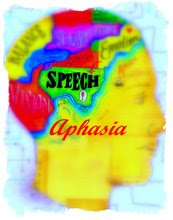
(PhysOrg.com) -- Scientists are for the first time studying a speech therapy technique called Melodic Intonation Therapy to find out what happens in patients’ brains. The therapy is used to teach people who have aphasia (inability to speak) after suffering a stroke to speak, and makes use of the fact that many people who cannot talk can still sing.

When patients suffer a stroke on the left hemisphere of the brain it affects their ability to speak, but melodic intonation therapy attempts to tap into the right side of the brain if it is undamaged. Music affects many parts of the brain in both hemispheres, and it influences motor skills, emotions and hearing. If the affected person is taught to sing sentences, they can then learn to speak them. NEXT...

Sunday, November 15, 2009

Aphasia and sing along

Monday, November 9, 2009

Music Lessons Boost Brain Power


WASHINGTON — For those who seriously practiced a musical instrument when they were young, the experience was more than just entertainment. Recent research shows a strong correlation between musical training for children and certain mental abilities.

The research was discussed at a session at a recent gathering of acoustics experts in Austin, Texas.

Laurel Trainor, director of the Institute for Music and the Mind at McMaster University in West Hamilton, Ontario, and colleagues compared preschool children who had taken music lessons with those who did not. Those with some training showed larger brain responses on a number of sound recognition tests given to the children. Her research indicated that musical training appears to modify the brain's auditory cortex.

Can larger claims be made for the influence on the brain of musical training? Does training change thinking or cognition in general? NEXT...............

Sunday, November 8, 2009

Music Therapy Helps Stroke Patients Recover

Few people over the age of 10 would list "Happy Birthday" among their favorite songs. But Harvey Alter, now 62, has a special fondness for it. It helped teach him how to talk.

One morning in June 2003, Alter, then a self-employed criminologist, was putting a leash on his dog, Sam, in preparation for a walk when suddenly he felt dizzy and disoriented.

"My thoughts were intertwined, not making sense," he said in a recent interview. "I knew I was having a stroke."

At St. Vincent's Hospital, doctors diagnosed an ischemic stroke, caused by a blockage in blood flow to part of the left half of his brain. As a result, the right side of his body was temporarily paralyzed, the right side of his face drooped and he had trouble coming up with the right words and stringing them into sentences - a condition called aphasia.

Within hours of his stroke, Alter met with Loni Burke, a speech therapist. At first he was completely nonverbal; within a few days he could say small words.

"Mostly, he said, 'No,' " Burke recalled, "because he was frustrated that he couldn't speak."

Friday, September 25, 2009


folio: Highlighting scholarship and research at The Graduate Center

The Musical Angle on Disability

Sometimes the spark that ignites a new area of scholarship happens in the classroom, sometimes it happens in the field where research is conducted, and sometimes it happens at an academic conference or symposium. In the case of "music and disability"—an emerging subfield of musicology and music theory—it happened on a train.

About ten years ago, music scholar Joseph Straus was traveling by Amtrak, on his way home from Penn State University, where he had just given a colloquium. After chatting with the person seated next to him—a Penn State faculty member - he pulled out a book he'd been reading about autism, the neurobiological syndrome characterized by impaired social interaction and communication and restricted and repetitive behavior. Seeing the book, his fellow passenger asked if he was interested in "disability studies." Straus had never heard next...

Sunday, September 13, 2009

Hey jude by The Beatles + lyrics

Sunday, July 19, 2009

Music therapy treats diseases and conditions from Parkinson's to autism


Listen up: belting out tunes in the shower may not only be music to your ears, but may also treat a variety of disorders such as Parkinson’s disease, aphasia and dementia.

In fact, singing has both physical and neurological benefits, according to a CNN article in which Dr. Wendy Magee, International Fellow in Music Therapy at the Institute of Neuropalliative Rehabilitation in London, described music as a “mega-vitamin for the brain” that can improve a host of condition Next..

Wednesday, April 29, 2009

Melodic intonation therapy

Precautions

Patients and caregivers should be aware that there is little research to support consistent success with MIT. Theoretically, this form of therapy has the potential to improve speech communication to a limited extent.

Description

Melodic intonation therapy was originally developed as a treatment method for speech improvements in adults with aphasia. The initial method has had several modifications, mostly adaptations for use by children with apraxia. The primary structure of this therapy remains relatively consistent however.

There are four steps, or levels, generally outlining the path of therapy.

Preparation

Preparation for MIT involves some additional research into the therapy and discussions with a neurologist and a speech pathologist. It is important to have an understanding of the affected brain areas. MIT is most likely to be successful for patients who meet certain criteria such as non-bilateral brain damage, good auditory aptitude, non-fluent verbal communication, and poor word repetition. The speech pathologist should be familiar with the different MIT methodologies as they relate to either adults or children.

Aftercare

There is no required aftercare for MIT.

Risks

There are no physical risks associated with the use of melodic intonation therapy.

Normal results

The expected outcome after completion of the MIT sequence is increased communication through production of intelligible word groups. Patients are typically able to form short sentences of 3–5 words, but more complex communication may also be possible depending on the initial cause of speech impairment.

Resources

BOOKS

Aldridge, David. Music Therapy in Dementia Care. Jessica Kingsley Publishing, 2000.

PERIODICALS

Baker, Felicity A. "Modifying the Melodic Intonation Therapy Program for Adults with Severe Non-fluent Aphasia." Music Therapy Perspectives 18, no. 2 (2000): 110–14.

Belin, P., et al. "Recovery from Nonfluent Aphasia After Melodic Intonation Therapy: A PET Study." Neurology 47, no. 6 (December 1996): 1504–11.

Bonakdarpour, B., A. Eftekharzadeh, and H. Ashayeri. "Preliminary Report on the Effects of Melodic Intonation Therapy in the Rehabilitation of Persian Aphasic Patients." Iranian Journal of Medical Sciences 25 (2000): 156–60.

Helfrich-Miller, Kathleen. "A Clinical Perspective: Melodic Intonation Therapy for Developmental Apraxia." Clinics in Communication Disorders 4, no. 3 (1994): 175–82.

Roper, Nicole. "Melodic Intonation Therapy with Young Children with Apraxia." Bridges 1, no. 8 (May 2003).

Sparks R, Holland A. "Method: melodic intonation therapy for aphasia." Journal of Speech and Hearing Disorders. 1976; 41: 287–297.

ORGANIZATIONS

American Speech-Language-Hearing Association. 10801 Rockville Pike, Rockville, MD 20852. (301) 897-5700 or (800) 638-8255; Fax: (301) 571-0457. action center@asha.org. .

Music Therapy Association of British Columbia. 2055 Purcell Way, North Vancouver, British Columbia V7J 3H5, Canada. (604) 924-0046; Fax: (604) 983-7559. info@mtabc.com. .

The Center For Music Therapy. 404-A Baylor Street, Austin, TX 78703. (512) 472-5016; Fax: (512) 472-5017. info@centerformusictherapy.com. .

Sunday, June 29, 2008

Yellow ledbetter KARAOKE

coldplay - clocks (karaoke)

Queen Bohemian rhapsody (original karaoke version)

abba dancing queen (karaoke)

Sunday, March 16, 2008

Broadband Listening

Broadband technologies have revolutionized the way the world sends and views information. With a click of a button, megabytes of visual and audio stimuli at our fingertips thanks to new developments in DSL, cable, and radio transmissions that implement broadband. Broadband refers to the signaling method that uses a wide array of frequencies. Much the same way as broadband is used, our ears pick up a relatively large range of frequencies and transmit them via the auditory nerve to a multitude of processing centers; and just like technology when it does not work, disruption of the auditory pathways can cause serious problems. Aphasias like Wernike’s aphasia and Broca’s aphasia as well as lesions in the cochlear nucleus show just how many processing areas there are in the brain that give rise to our reality of speech. Especially when you get into the

Language and personality

I’m reading Musicophilia: Tales of Music and the Brain by Oliver Sacks, and came upon this quote:

We are a linguistic species — we turn to language to express whatever we are thinking, and it is usually there for us instantly. But for those with aphasia, the inability to communicate verbally may be almost unbearably frustrating and isolating (…).

I’ve met a few people with aphasia, and for those with mainly expressive aphasia this is normally the case; they are frustrated and saddened by their loss of language. But I still wonder about global aphasia; is it possible for a person with global aphasia, who cannot express or understand language, to still be the same person as he or she was before the onset of aphasia? So much of the personality seems to be interlinked with language, and it’s hard to imagine that the personality is somehow intact when the language is severely damaged.

As I was writing this, I realized that I’m not really sure how I would define personality, so I looked it up in Merriam-Webster.

Personality:

1 a: the quality or state of being a person

b: personal existence

2 a: the condition or fact of relating to a particular person; specifically : the condition of referring directly to or being aimed disparagingly or hostilely at an individual

b: an offensively personal remark personalities>

3 a: the complex of characteristics that distinguishes an individual or a nation or group; especially : the totality of an individual’s behavioral and emotional characteristics

b: a set of distinctive traits and characteristics personality of the city>

4 a: distinction or excellence of personal and social traits; also : a person having such quality

b: a person of importance, prominence, renown, or notoriety personality>

Saturday, March 15, 2008

HealingMusicEnterprises.com

Audiences today are clamoring for information about how music heals. Dr. Alice Cash is the person who can deliver.

Physicians and medical studies have shown the many varied uses of music and sound for healing purposes as well as wellness. From Alzheimer patients to lullabies for mother - baby bonding, music does what nothing else can. Healing does not mean curing; healing music refers the improvement of symptoms and the improvement of chronic or temporary conditions. Some of the things music can do FOR YOU:

  • Stabilize heart-rate
  • Improve the immune system
  • Lower blood pressure
  • Stabilize blood pressure
  • Decrease prescription medications
  • Energize the body
  • Calm and soothe
    the body & mind
  • Bring back happy & comforting memories
  • Distract from pain

Tuesday, August 21, 2007

From Singing to Speaking: Suggestions For Using Music With People With Aphasia

Saturday, May 19, 2007

The Music and Neuroimaging Lab

The Music and Neuroimaging Laboratory at Beth Israel Deaconess and Harvard Medical School

Mission Statement

The human brain has the remarkable ability to adapt in response to changes in the environment over the course of a lifetime. This is the mechanism for learning, growth, and normal development. Similar changes or adaptations can also occur in response to focal brain injuries, e.g., partially-adapted neighboring brain regions or functionally-related brain systems can either substitute for some of the lost function or develop alternative strategies to overcome a disability.

Through ongoing research, the Music and Neuroimaging Laboratory’s mission is to:

Projects

The Music and Neuroimaging Laboratory is currently involved in a variety of neurology/neuroscience research projects, ranging from studies examining the effects of instrumental music training on children’s brain and cognitive development to studies examining the neural correlates of absolute pitch, congenital and acquired amusia, neural effects of auditory and motor learning, neural correlates of singing and speaking in normal subjects as well as aphasic patients, to studies examining the effects of therapies that could facilitate the recovery from aphasia and sensorimotor deficits after a stroke. We have also recently begun to examine the effects of a non-invasive, electrical stimulation technique (TDCS - transcranial direct current stimulation) on blocking or enhancing regional brain activity.


Our Main Research Interests

1. The Brain that Makes Music or the Musical Brain. We are studying the cerebral correlates of musical abilities and the functional/structural cerebral adaptations of music training using musicians as a model. This work is supported by the NSF and the International Foundation for Music Research (IFMR). For a sample of recent papers please see Publications (Schlaug et al., 1995a,b; Amunts et al., 1997; Jaencke et al., 1997; Schlaug, 2001; Keenan et al., 2001; Muente et al., 2002; Lee et al., 2003; Hutchinson et al., 2003; Gaser et al., 2003).

2. The Effects of Music Training on Cognitive and Brain Development in Children. In longitudinal and cross-sectional studies we are examining the effects of learning to play a musical instrument as well as the effects of enriched music instruction in school on various behavioral and cognitive measures as well as brain development. This work is supported by NSF, the International Foundation for Music Research, and the Grammy Foundation.

3. Neural Correlates of Absolute Pitch. We are examining the structural and functional brain markers of this unique ability. We are also interested in the incidence of this ability in special populations and the familial occurrence of absolute pitch. For a sample of recent papers see Publications (Schlaug et al., 1995; Keenan et al., 2001; Schlaug, 2003).

4. Behavioral and Neural Effects of Auditory Learning. We are examining the behavioral and brain effects of acquiring auditory skills in adults, mainly in those without any musical training.

5. Pathophysiology of Acute Human Stroke. We are using new magnetic resonance imaging methods such as perfusion and diffusion weighted imaging to select patients for treatment, to determine the benefit/risk ratios of experimental treatment approaches, and to assess tissue outcome after an intervention is done. This work is supported by the NIH and the Doris Duke Charitable Foundation. For a sample of recent papers please see Publications (Schlaug et al., 1997, 1999; Fink et al., 2002a,b; Selim et al., 2002; Linfante et al., 2002).

6. Determinants and Facilitators of Stroke Recovery. W are using functional magnetic resonance imaging (fMRI) and transcranial magnetic stimulation (TMS) to study stroke recovery. This research is supported by the Dana Foundation and the NIH. For a sample of relevant papers please see Publications (Hutchinson et al., 2002; Kobayashi et al., 2002; Mottaghy et al., 2002).

7. Singing and Speaking in Normal Subjects and in Patients with Aphasia. We are examining the sharing of neural substrates when subjects sing and speak. This work will be used the examine the neural correlates of innovative therapies in aphasia rehabilitation.


Saturday, April 7, 2007

Rehab


Not the Same Old Song

By Jennifer A. Rathbun, MM, MT-BC


Music, Speech, and Language

Melodic intonation therapy (MIT) has been widely used by speech-language pathologists with aphasic patients. According to Sparks and Holland,5 MIT is a step-by-step procedure that uses melody based on the natural prosody of functional phrases to stimulate verbal expression. Later, the melody is faded into chant and finally, the chant is faded into normal speech. At TIRR, both musical speech stimulation (MSS) and a modified form of MIT are used during sessions with a music therapist and speech-language pathologist.

MSS is the musical form of phrase completion. It uses the unimpaired ability to sing in order to facilitate spontaneous verbalizations. Patients are asked to complete phrases within familiar songs, such as "You Are My Sunshine." This automatic singing is practiced and then transferred into functional expression as automatic speech emerges.

Apraxic patients benefit from MSS because familiar songs have a predictable rhythm, which facilitates oral-motor timing. In addition, songs are directional-the chord progressions, or musical building blocks, lead the song to resolution.

Music therapists also provide simple instruments to facilitate the coordination of the breathing mechanism. The music made by these instruments, such as harmonicas, recorders, and melody horns (instruments with a small keyboard connected to a mouthpiece), motivates the patients to exercise breath control.

Sunday, February 18, 2007

Marc Black: Stroke of Genuis

Sunday, February 11, 2007

Everything Not Lost and karaoke


I'll be counting up my demons, yeah,
Hoping everything's not lost,
Everything's not lost,
When I'm counting up my demons.

There's always one for everyday,
With the good ones on my shoulder,
I drove the other ones away.

If you ever feel neglected,
If you think all is lost,
I'll be counting up my demons, yeah,
Hoping everything's not lost.

When you thought it was over,
You could feel it all around,
Everybody's out to get you,
Don't you let it drag you down.

Cos if you eve feel neglected,
If you think that all is lost,
I'll be counting all the demons, yeah.

Singing out o yeah [x3]

Everything's not lost,
Come on yeah, o yeah, come on yeah,
Everything's not lost,
O yeah, [x3]
Everything's not lost,
Come on yeah, o yeah,
Come on yeah [x2]
O yeah, Come on yeah,
Everything's not lost, Sing out yeah,

Come on yeah [x2]
Everything's not lost,
Come on yeah, o yeah,
Sing out yeah,
Everything's not lost.